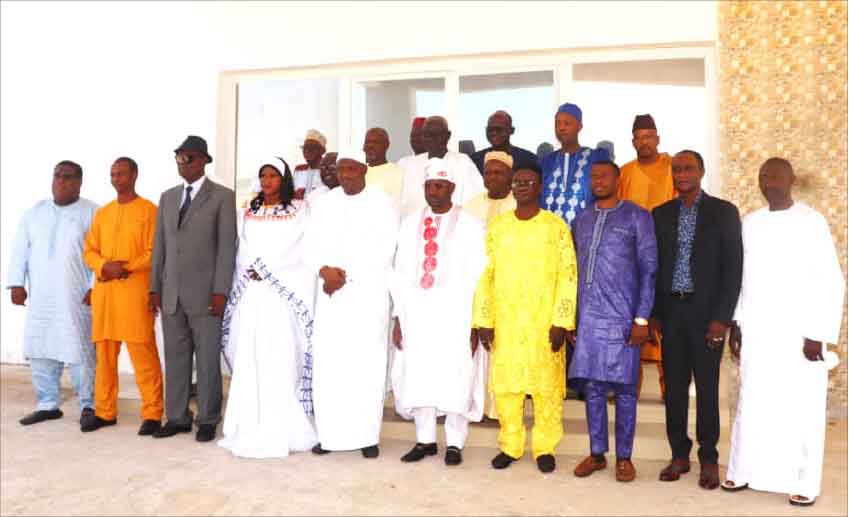


The Edward Francis Small Centre for Rights and Justice has proposed an independent National Dialogue Commission (NDC) to the Gambian government, calling for the restructuring and review of the current form of national dialogue and establishment of an independent National Dialogue Commission (NDC) in order to restore credibility, national ownership, and effectiveness to the process.
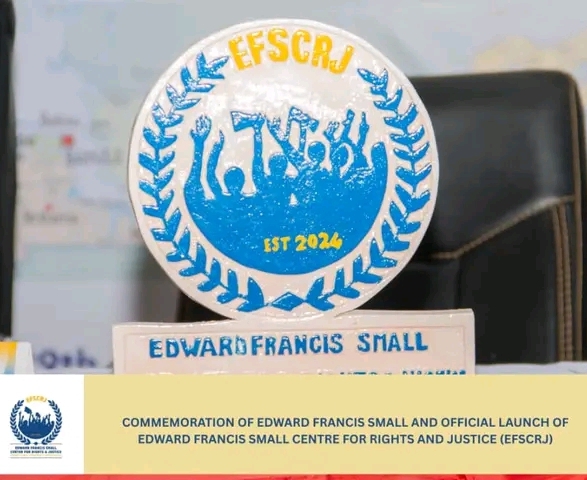
”We have submitted the position paper to the Chief of Staff and the Director of Press and Public Relations at State House,” announced on Monday.
While the Gambian rights group acknowledged in principle the current national dialogue, the institution criticized it for its lack of independence, credibility, and effectiveness.
”EFSCRJ finds that the National Dialogue, as currently constituted, lacks independence, credibility, and effectiveness. Although extensive recommendations have been produced since 2024 on constitutional reform, electoral reform, gender equality, economic governance, anti-corruption, media freedom, and migration, there has been little to no implementation,” EFSCRJ stressed, reflecting on persistent inequality, injustice, corruption, and weak institutions six decades after the country’s independence, which it said should have been undertaken since 2017 as an integral part of transitional justice agenda.
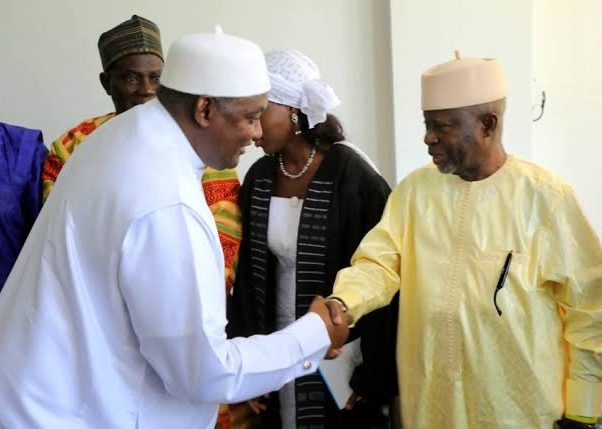
The institution proposed an independent, non-partisan National Dialogue Commission (NDC).
”This body must be legally empowered, inclusive, time-bound, and mandated to ensure implementation of its outcomes, guided by a consultatively developed National Dialogue Policy and Plan of Action.”
The Gambia’s current format of National Dialogue was first held in 2024, and subsequently, 2025, where government leaders, political parties representatives, civil society, and other stakeholders came together to discuss key national issues, including the promotion of national unity, and address pressing challenges facing the country.