

By Alagi Yorro Jallow (Part IV)
Fatoumatta: Every democracy reaches a point where it must choose between the easy comfort of rumor and the hard discipline of truth. The National Assembly’s Select Committee has forced that choice upon The Gambia, and in doing so, it has restored dignity to a woman whose courage once shielded the nation’s journalists from the darkness of impunity.
There are pivotal moments in a nation’s history when truth prevails over rumor and courage surpasses slander. When a person’s integrity is tested and doubted, it can emerge stronger. The vindication of Amie Bensouda by the National Assembly Select Committee represents such a moment. This is not merely the clearing of a name; it is the restoration of dignity to a woman who stood for justice when many remained silent and who defended journalists during periods of widespread fear.
For years, social media accusations circulated regarding her alleged involvement in the sale of former President Yahya Jammeh’s assets, manipulation of processes, and personal enrichment. None of these allegations was substantiated by evidence. However, in a context where rumors often spread more rapidly than the truth, the reputational damage was significant. Her name became entangled in political speculation.
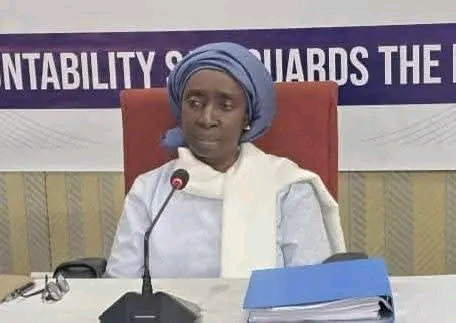
But when she appeared before the National Assembly Select Committee, she did what only the courageous can do: she faced her accusers with facts, clarity, and unwavering composure. She stated plainly that she never bought, sold, or benefited from any of Jammeh’s assets. She asked the Committee Chair directly to confirm whether any evidence existed against her. And the Chair responded with the only answer that truth allows: “Certainly, certainly.”In that moment, the fog of rumor lifted. The Committee’s report, bold, historic, and uncompromising, did not mention her name. Not once. Not in the findings. Not in the recommendations. Not in the list of those who must answer for wrongdoing. The Committee’s counsel, Aji Sainey Kah, made it clear: the National Assembly relies on evidence, not gossip. And the evidence vindicated her completely.
What the Committee did note was a “perceived conflict of interest”: that her law firm represented SSHFC at a time when SSHFC was among the institutions examined by the Janneh Commission. This is not a finding of wrongdoing. It is not an accusation of bias. It is not a claim of impropriety. It is a procedural observation — the kind that arises in commissions of inquiry across the world, where the line between perception and reality must be carefully managed.
And she addressed it fully. She explained that she stepped away from the day-to-day management of her firm after accepting the role. She explained that both SSHFC and the Commission shared the same objective: recovering public funds and ensuring accountability. She explained that her firm’s work did not conflict with her mandate. The Committee accepted her explanation. It made no adverse finding. It issued no sanction. It did not question her integrity. But this story is larger than one woman’s vindication. It is about the kind of country we want to be.I write this not only as a commentator, but as someone who knows her courage personally. Amie Bensouda was my lawyer. She stood with journalists when standing with journalists was dangerous. She defended press freedom when many feared even being seen near a newsroom. She offered legal protection to those who had none. She believed that truth deserved defenders, even when the state tried to silence it.
Fatoumatta: In the darkest days of Gambian journalism, when reporters were arrested, newspapers burned, and editors exiled, she was one of the few who did not flinch. She did not calculate political risk. She did not hide behind neutrality. She stood for the principle that justice must protect the vulnerable, not persecute them. That is why her vindication matters. It is a reminder that integrity still has a place in our public life.It is a reminder that those who serve the nation with honesty deserve our protection, not our suspicion.And it is a reminder that the fight against corruption must be rooted in truth, not in the weaponization of rumor.
The National Assembly’s courage in confronting impunity, recommending the reprimand of the current Attorney General and the criminal investigation of his predecessor, marks a turning point in our democratic journey. But their courage also extends to something quieter yet equally important: refusing to allow an innocent woman’s name to be tarnished by baseless allegations.As The Gambia stands at a crossroads, we must choose the path of truth over speculation, evidence over rumor, and justice over convenience. The vindication of Amie Bensouda is not just her victory; it is a victory for every Gambian who believes in fairness, due process, and the rule of law.
Fatoumatta: Her vindication is not merely her victory. It is a mirror held up to the nation, asking whether we will choose evidence over rumor, fairness over frenzy, and justice over convenience. The Gambia cannot move forward by destroying its bravest. We move forward by defending truth, especially when it is under attack.