

By Alagi Yorro Jallow
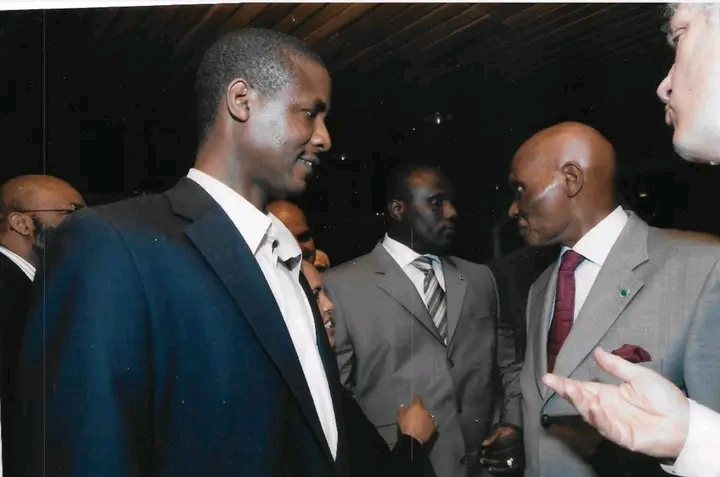
Fatoumatta: As Senegal prepares to honor Abdoulaye Wade’s postponed centenary celebration, I return to a moment nearly two decades ago when our lives briefly intersected at Harvard Kennedy School. As a graduate student and member of the Harvard Gazette editorial team, I witnessed not only the statesman who spoke of Africa’s renaissance, but the generous, curious, and unexpectedly warm human being who shared Iftar with me, offered me a job, introduced me to his ministers, and pressed support into my hands.
He arrived at Harvard with the stride of a man who had lived history and still believed in tomorrow. I was a young Gambian scholar then, far from home, yet suddenly drawn into the orbit of an African president whose intellect, warmth, and humanity revealed the man behind the title. Nearly two decades later, as he reaches the rare threshold of a hundred years, I return to that evening in Cambridge: the talking drum echoing through the Forum, the warmth of his welcome, the kindness I never forgot.
He stepped into the John F. Kennedy Jr. Forum that evening with the unmistakable presence of a man who had lived through empires, ideologies, and eras yet still carried the optimism of someone convinced that Africa’s best chapters lay ahead. The tama, the West African talking drum, announced his arrival with its ancient cadence, a sound that seemed to fold Dakar and Cambridge into the same room. As a graduate student and member of the Harvard Gazette editorial team, I watched President Abdoulaye Wade, then eighty-one, but moving with the vigor of a man decades younger, take the stage not merely as Senegal’s head of state, but as a philosopher president, a restless architect of ideas. I had no way of knowing that within the hour, I would be sharing Iftar with him in the Dean’s office, speaking with him directly, and experiencing a gesture of generosity that would stay with me for the rest of my life.
Wade’s lecture that night was a sweeping meditation on Africa’s future. He spoke of an African renaissance not as a slogan but as a lived conviction. He described a continent emerging from the long shadows of colonialism, conflict, and underdevelopment, and stepping into a new era of democratic transitions, economic ambition, and intellectual self-confidence. Senegal, he argued, was proof that Africa could build institutions, nurture stability, and invest in its people. He spoke of roads, schools, and the 40 percent of Senegal’s budget devoted to education “an economic challenge,” he admitted, but also a moral one.
He spoke, too, of his own political journey: the arrests, the hunger strike, the long years in opposition, the peaceful transfer of power in 2000 that made him a symbol of democratic possibility in West Africa. His story was a reminder that democracy in Africa has always been a fragile negotiation between hope and risk, courage and consequence.
But the moment that has stayed with me was not the speech; it was the Iftar. It was Ramadan. The sun had set. And there we were, a Senegalese president and a Gambian graduate student sharing dates, tea, and conversation in the quiet of the Dean’s office. He recognized immediately that I was Gambian. His face lit up. “A Gambian at Harvard,” he said with delight, as though he had discovered a long-lost relative.
He asked when I would graduate. When I told him, he offered me a job in Senegal on the spot. He introduced me to his Foreign Minister, Cheikh Tidiane Gadio, and the Senegalese ambassador in Washington, instructing them to “look after” me. They handed me their cards and encouraged me to reach out when I completed my studies. And then, in a gesture of generosity I will never forget, President Wade gave me a substantial amount of U.S. dollars to support my studies, unaware that I was on a full scholarship. I declined the job offer, but I never forgot the kindness. It is rare for a sitting president to sit with students, break fast with them, and speak with such ease and humility. It is rarer still for a president to offer personal support to a student from another country. But Wade was not a conventional leader. He was a man of ideas, sometimes controversial, often ahead of his time, always intellectually restless.
He spoke that night of a United States of Africa, of digital revolutions, of continental alliances, of Africa’s youth as the continent’s greatest asset. He spoke of China, India, Dubai, and Iran as partners in Africa’s future. He spoke of the need for African leaders to think beyond borders, beyond old narratives, beyond inherited limitations. He spoke like a man deeply committed to Africa’s capacity to reinvent itself.
Fatoumatta: Today, as he turns 100, the world remembers him as a statesman, a scholar, a Pan-Africanist, a champion of education, and a believer in Africa’s future. But I remember him also as the man who sat with me during Ramadan, who asked about my studies, who offered me a future, who gave generously without expectation, who treated a young Gambian student with the dignity of a peer.
History will debate his politics. Scholars will analyze his presidency. Senegal will celebrate its centenary. But I will always remember the human being, the warmth, the curiosity, the generosity, the sense of shared Senegambian kinship. A century of life is a rare gift. A century of ideas is rarer still. Abdoulaye Wade has given Africa both.
Fatoumatta: As he enters his hundredth year, I honor not only the president he was, but the man I met, the man who carried the weight of a continent’s hopes yet still found time to share dates with a young student in Cambridge. In that brief encounter, I saw the essence of Abdoulaye Wade: a mind shaped by struggle, a spirit animated by possibility, and a heart open enough to recognize kinship across borders. May his century remind us that leadership is not measured only in policies or monuments, but in the quiet moments of humanity that outlive power. And may the tama that once welcomed him onto the Harvard stage continue to echo across the Senegambian horizon as a drumbeat for the ideas, the courage, and the generosity of a man who believed Africa’s future was worth dreaming into being.
……..
Alagi Yorro Jallow chatting with President Abdoulaye Wade during Ramadan at Harvard University’s John F. Kennedy Jr. Forum in September 2007. Photo courtesy of Alagi Yorro Jallow.