

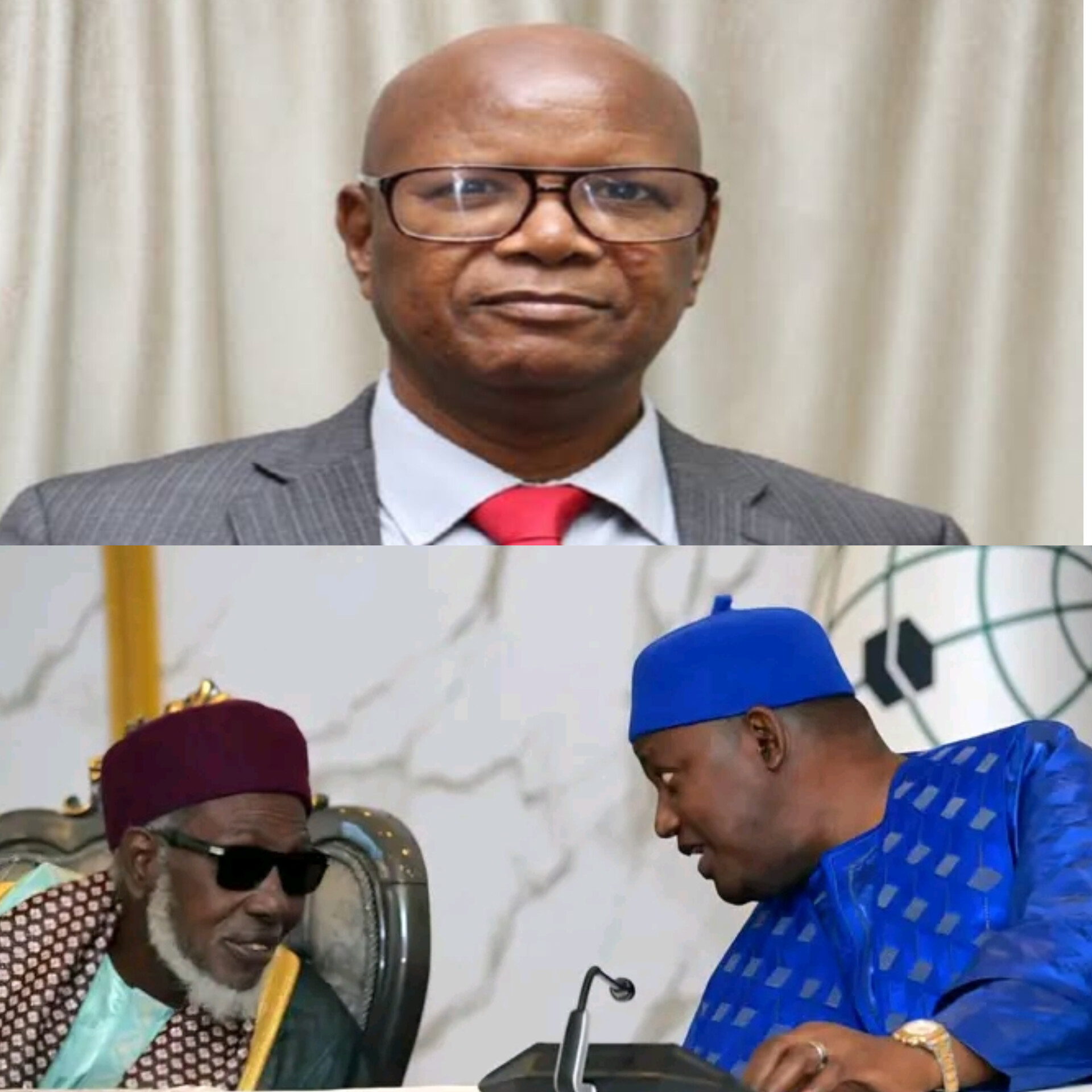
Demba Ali Jawo, former Information Minister
The annual courtesy call on the president of the republic by the “Banjul Muslim Elders” at the end of each Ramadan, while no doubt has some positive aspects, it certainly requires more changes in order for it to impact the lives of ordinary Gambians.
Of course, the occasion had not only given the “Banjul Muslim Elders” the opportunity to continue to make demands on the executive, but the executive had also used the occasion to spread their political tentacles. Therefore, both the “Banjul Muslim Elders” and the government had been using the occasion to their own advantage. For instance, during the last courtesy call, the Minister of Religious Affairs, Hamat Bah did not shy away from calling on the attendees to pray for President Adama Barrow’s success in the forthcoming presidential elections.
There is no doubt that the format of the courtesy call has undergone quite a lot of changes since its commencement more than a hundred years ago when the Muslim elders of Banjul had used the occasion to highlight the numerous problems that they wanted the then colonial government to help address. Some of those demands included getting Muslim feast days such as Koriteh and Tobaski being given at least equal treatment with Christian feasts such as Christmas and New Year celebrations, considering the fact that the Muslims formed the majority in Banjul. However, after the Gambia gained independence and Gambians took over the reigns of power, there was an exponential growth of Muslim influence over the government and virtually all their previous demands were addressed.
Therefore, while the courtesy calls continued despite the changes, they virtually took on a more political tone, with those in power using the event as a conduit to extend their political influence to ordinary Gambians through their religious leaders, thus transforming the annual ritual into a praise singing match for the president and his administration, which, unfortunately, is still the reality today. Eventually, there was even an attempt to turn it into an ethnic jamboree, using influential members of the different ethnic groups to reach out to ordinary Gambians through their own tribal languages. However, apparently realising that the people had not much regard for those claiming to speak on their behalf, they had to modify the rules as they went along.
While the occasion no doubt has some positive aspects to it, considering the fact that it has now taken a national characteristic rather than a purely Banjul affair, but it needs a complete overhaul if it is to remain relevant to ordinary Gambians. For instance, it is quite a shame that the women folk have been completely excluded as if they are not part of the society. It is hard to understand how the term; “Banjul Muslim Elders” would exclude the women who are also among the elders of Banjul. Indeed, even the very fact that the Mayor of Banjul is a woman makes the decision to exclude her and all the other women, quite preposterous and absurd. How can they claim to speak on behalf of the people of Banjul when the chief executive of the city is treated as non-existent, apparently because of her gender? Yet, this is happening during the very period when the Gambia is observing the International Women’s Day, with the government making so much noise about being committed to women’s empowerment.
Let’s however hope that as the more educated and dynamic young people of Banjul eventually take over, they would either abandon this anachronism or at least inject some positive changes to it that would reflect the reality of the modern situation.